In some sense, you can organize work from the front line of an organization to the c-suite according to how abstract the information it concerns is.
Let’s take two examples of this –
In a B2B SaaS company, the front-line is usually folks from customer service, support, and folks like solutions engineers. The C-suite includes the usual COO, CFO, CMO, CEO, etc.
In a Retail company, the front line is usually the salespeople on the floor, and the C-suite includes the usual as listed above.
In their daily work, the front line from both these industries – an individual customer service representative or floor salesperson – only deals with information about a single customer, client, or sale.
The c-suite, on the other hand, must work with abstractions like customer/client segments, customer portfolios, and customer base.
The Challenge with Abstract Information
As information abstracts, more and more, it becomes harder to represent it, in a way that still retains details and deep insights, but is also non-redundant, concise, and actionable for folks who must use it to make decisions.
This is a significant challenge – so much so that there are complete roles, functions, and industries dedicated to this. Think of all the Sales Enablement and Analysis functions, Data Visualisation tools, or even Research organizations.
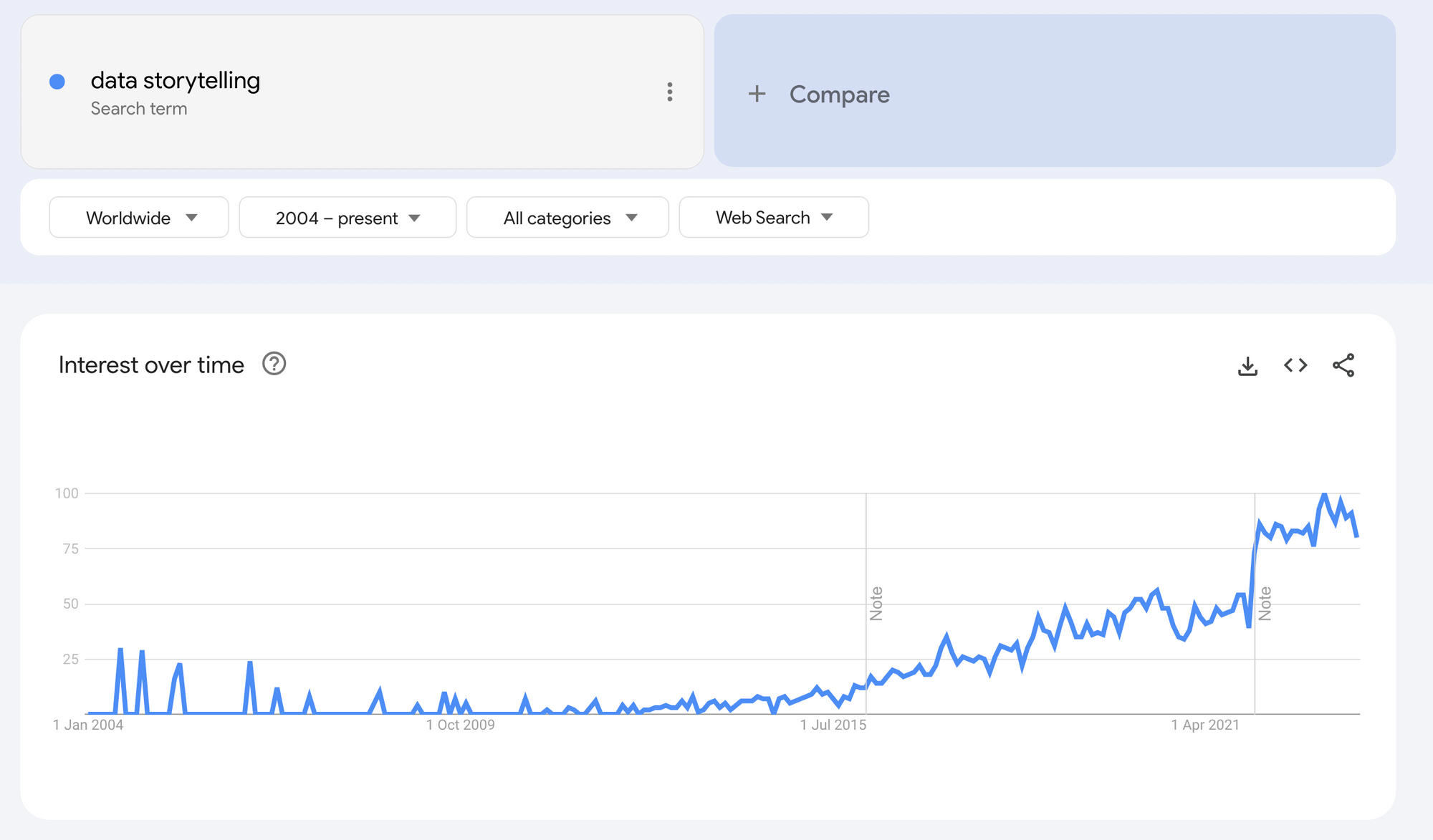
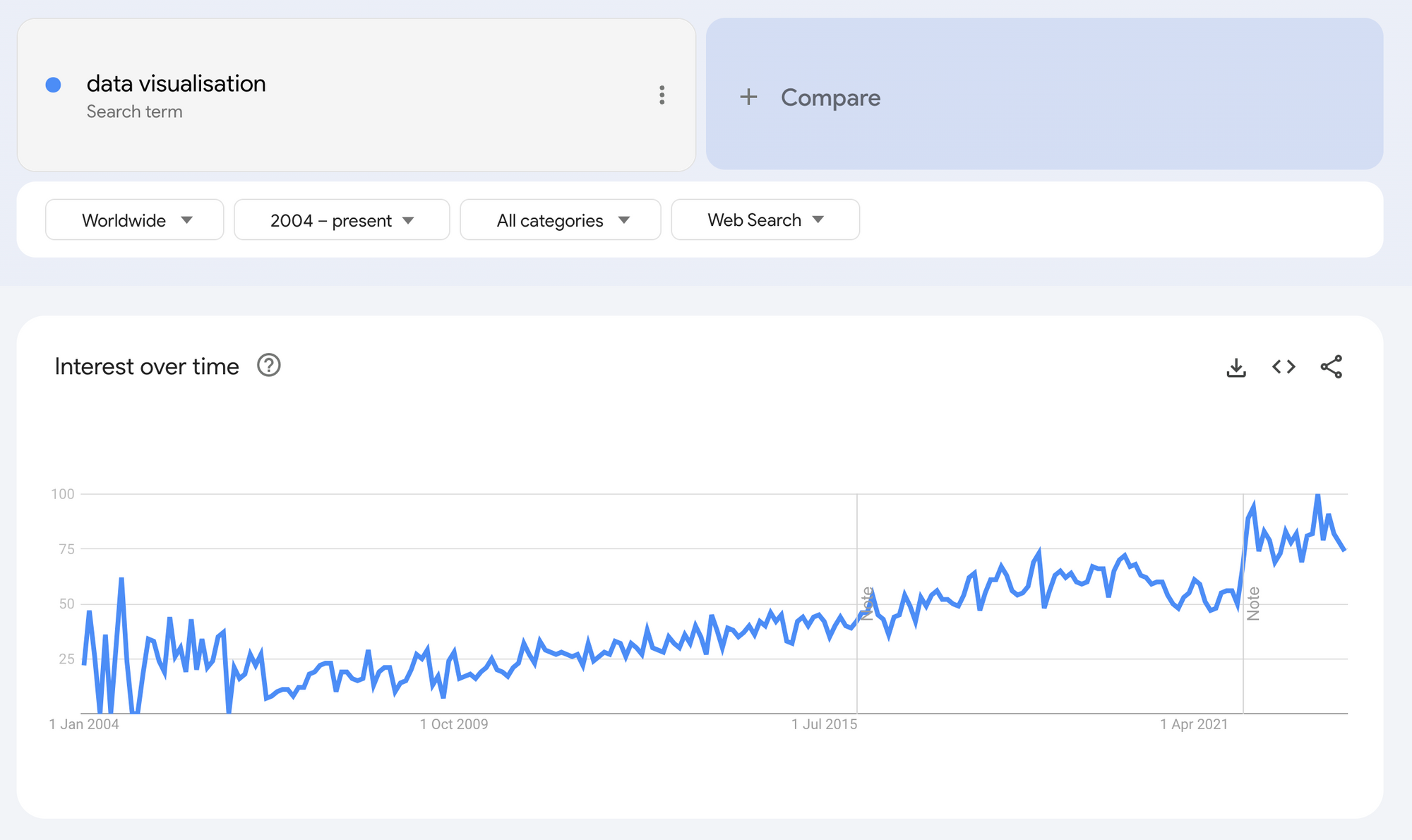
Think of how data-led storytelling has become more and more important in corporate discourse.
Google search trends from 2014 for the keywords ‘data visualisation’ and ‘data storytelling.’ Note that rise.
This is notably true for the last two decades because we have never had access to data like this before. And we will only have more and more data in the future.
LLMs and the Evolution of Work
So far, we had had to depend on numbers and visualisations of how numbers relate to another to take the place of words as we moved up and up from the particular to the general.
But now we can use words too! Thanks to Large Language Models.
In my mind, here are the 4 steps that go into abstracting information with an intention for a deliberate purpose, as in the case of business organizations.
Collecting specific information.
Creating a logic of abstraction.
Implementing the logic of abstraction.
Leveraging abstraction in decision-making.
I am not sure how much will LLMs come in handy to collect specific information (I hear that companies are working on LLM-led data collection), but for all the others, LLMs make each step easier to do than before. Simply because it is possible to use natural language to do them now – and effectively so.
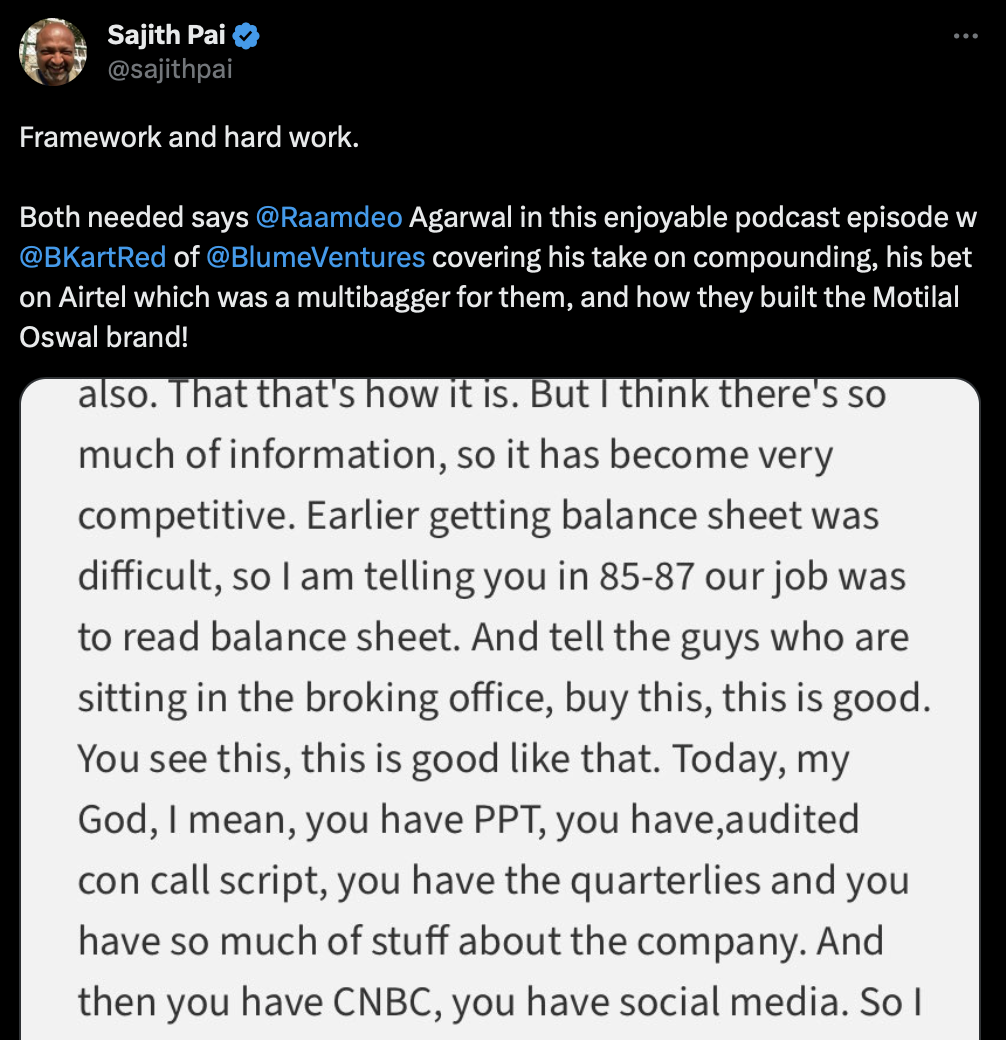
Came across this recent tweet from Sajith Pai, from the Investment Team at Blume Ventures, and was pleased to discover some relation between the quote on investing from Raamdeo Agarwal from Motilal Oswal and the picture I’m trying to paint.
Note how he mentions that back in the day 85-87% of their job was to read balance sheets (the particulars), but now folks are expected to use PPTs, track auditor con call scripts, CNBC, social media and so much more. The standard for information seems to have moved toward the general from the particular in finance too.
This means that any individual with access to the right specific data should be able to create a logic of abstraction, implement it in their understanding, and make better decisions with greater ease than before.
The benchmark for expected higher-order skills to deal with such abstractions effectively just went slightly up across the white-collar world.
Another way to put this is that all our career ladders just got one step shorter, if you’re up to skip a step.
This essay is what I like to term a “living document.” It’s literally draft zero and I fully anticipate that it will evolve over time. After an insightful review with ChatGPT (yes, I consulted a LLM!), I’m aware there are areas of this piece that can very clearly be refined further. But gotta put it up. It is what it is, I guess.

 Dhruv's Website