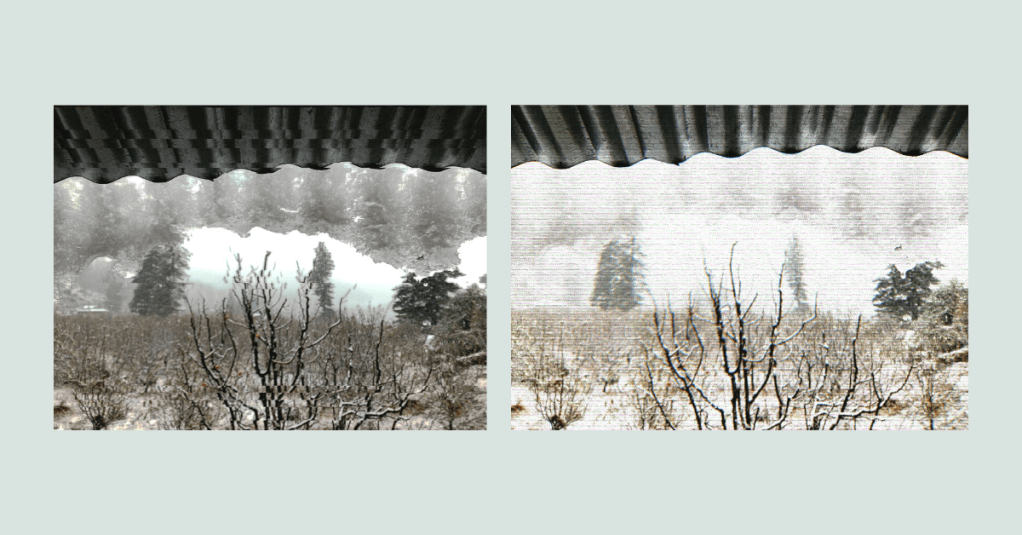
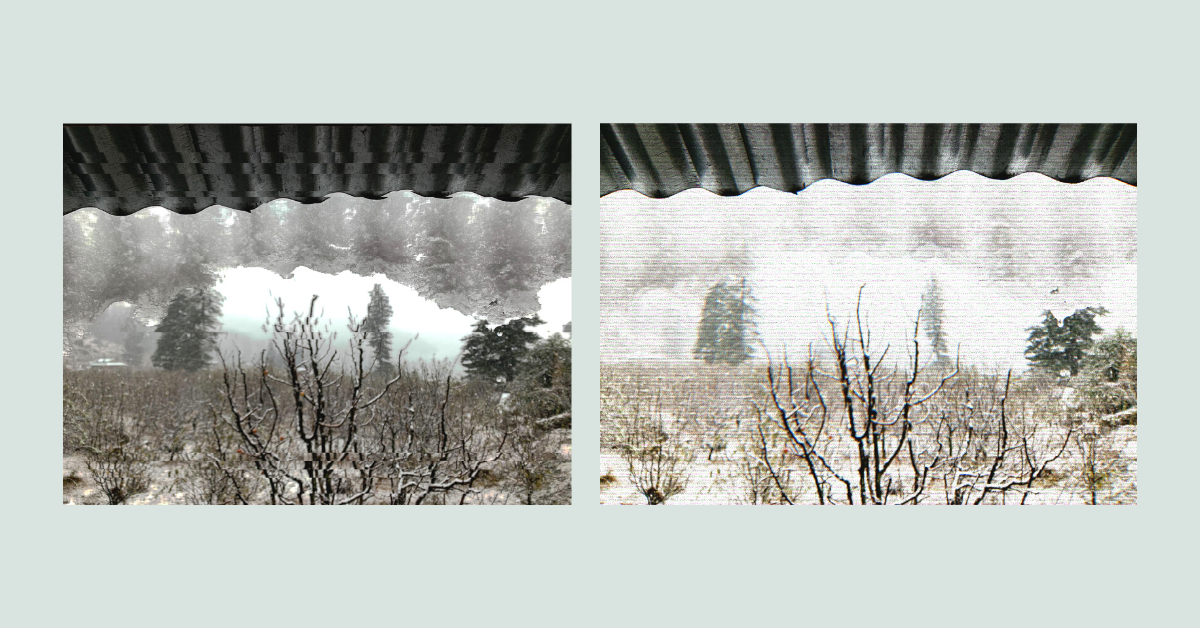
In Kalga, it was cold.
It was snowing; the Ground was cold, the Air was cold.
My friends were cold, I was cold. There wasn’t much to it.
There wasn’t much to it, to the cold in Kalga.
I called my friend and said, “It is cold.”
There wasn’t a reading to tell us of it.
Yet, he knew. “Yes, it is cold,” he said.
I wish there was more to say.
What was the nature of this cold?
It was snowing, and everything was cold.
That’s it, there wasn’t much to it.
What a failure of words, all this cold,
Only three words to put it.
“It is cold.” Then there was laughter.
Some context: I wrote this poem along with a paper on the nature of writing. I looked into the difference in writing as about the expression/becoming of the writer-self and writing as about the reflection/becoming of the reader-self.
Reading through Tagore, Kohak, and my own experiences, I noted that writing in the former frame becomes about recollection and is registered through an I, almost as a narrative of the writer-self. In the latter frame, the writing is registered at a more general level, the level of intuition, such that the I must not be evoked in recollection of it, the writing, instead, is retained by/in the reader.
In a very non-committal, almost evasive, fashion, yet with complete honesty, I concluded that all writing is almost always both – the reader and the writer are both eternally present and becoming in the text. The poem above was an attempt to intentionally write something which could be recollected and/or retained.
 Dhruv's Website